
Maintenance, repair and overhaul (MRO)
Marshall is recognised as a global authority on maintenance, repair and overhaul (MRO) for the Lockheed Martin C-130 Hercules, having built unrivalled experience on the platform since 1966.
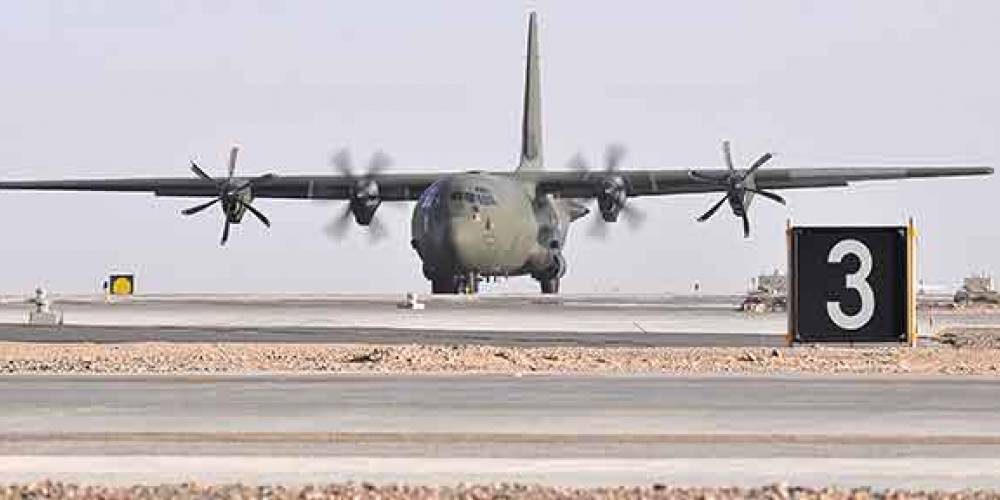
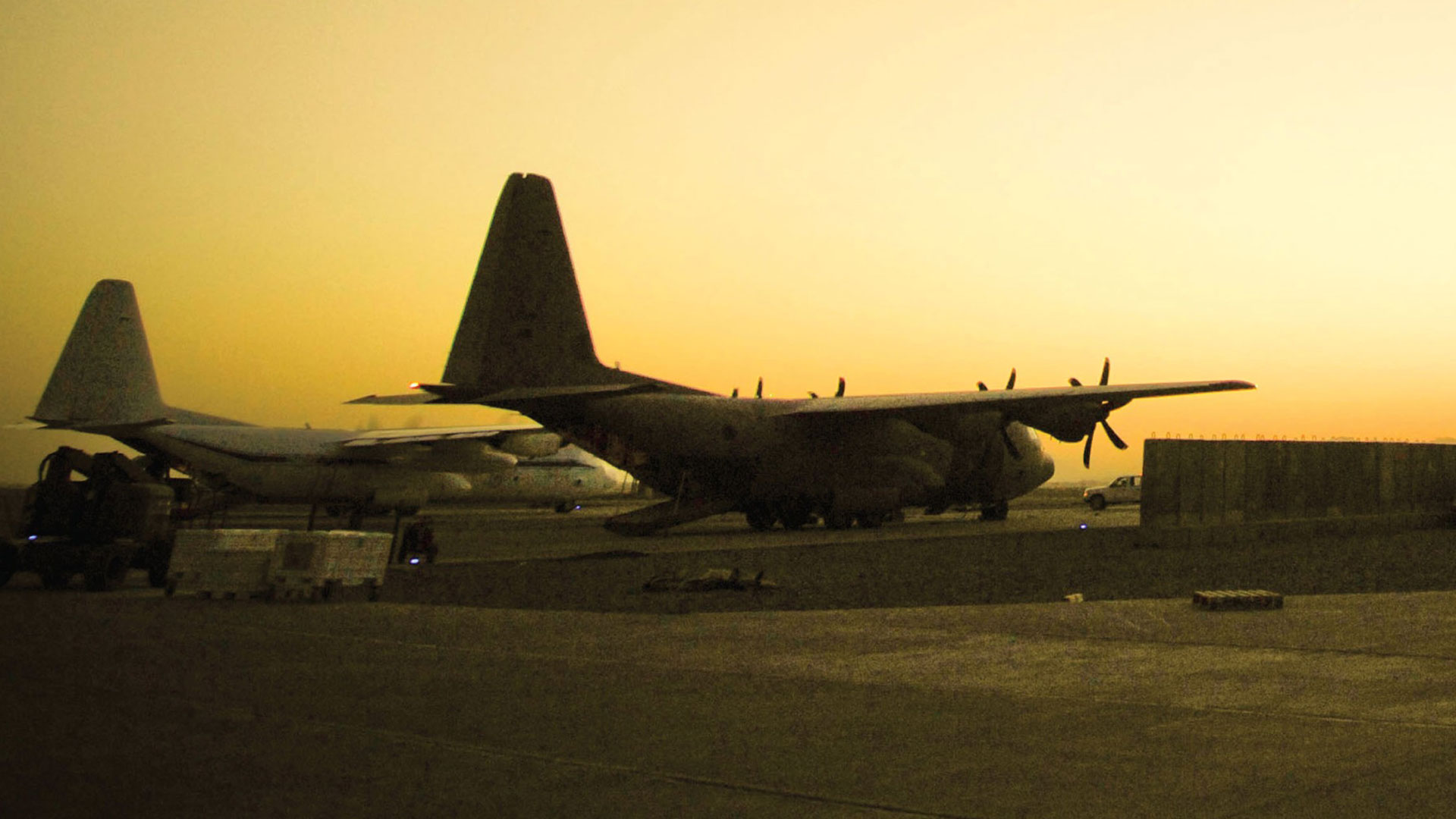
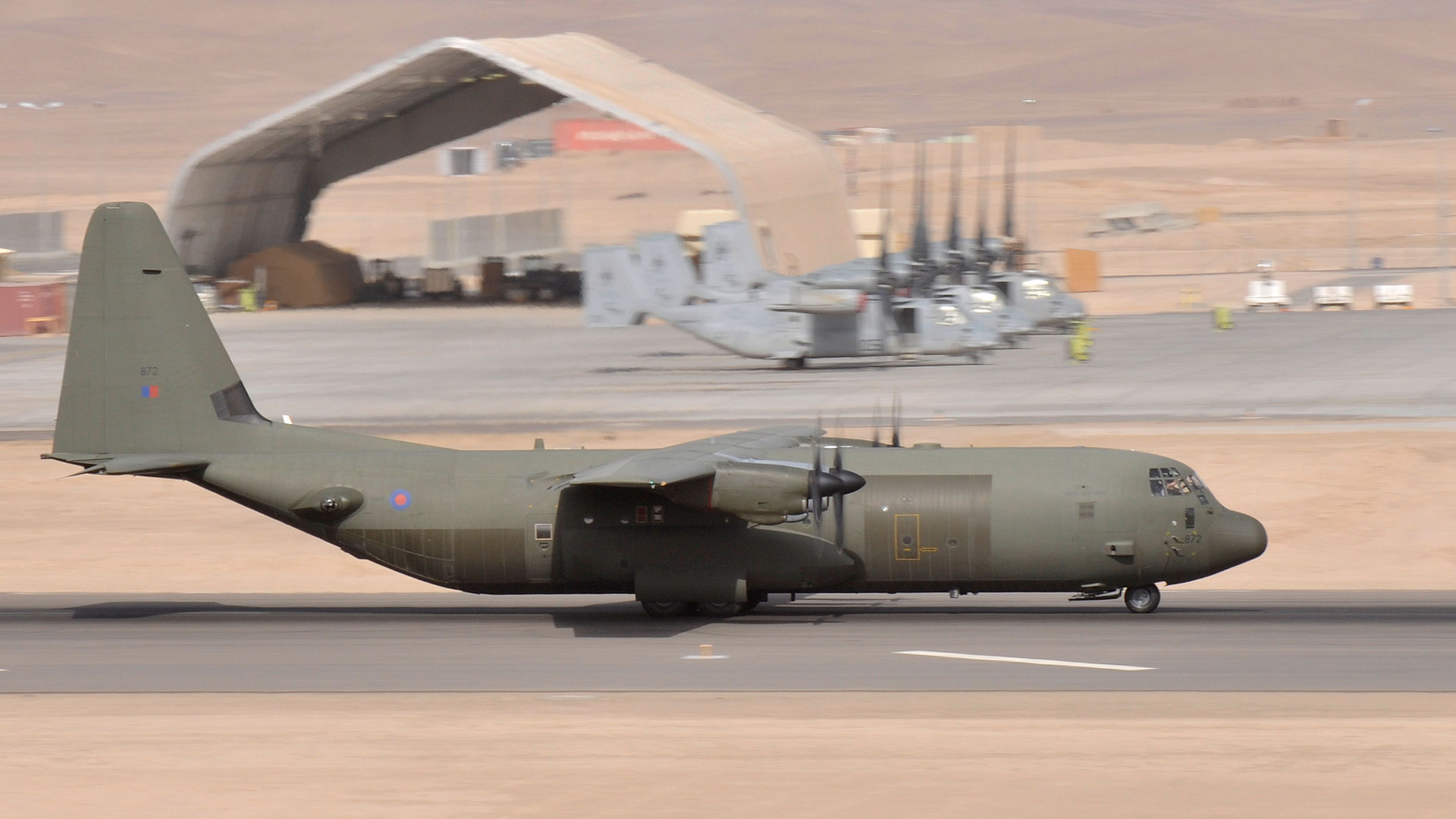
When a freak hailstorm in Afghanistan caused extensive damage to five RAF C‑130J aircraft, Marshall Aerospace sprang into action and delivered a rapid response that was only possible thanks to deep platform knowledge, creative problem-solving and integrated support.
On Tuesday, 23 April, 2013 an incredibly intense sand‑laden hailstorm struck Kandahar Airfield and the surrounding area. The half‑hour barrage of “golf‑ball‑sized” hail caused extensive damage to dozens of NATO aircraft, including more than 80 U.S. Army helicopters. International media sources at the time described the event as unprecedented in both severity and operational impact, underscoring the exceptional conditions in which the RAF’s Hercules aircraft were caught.
Under the Hercules Integrated Operational Support (HIOS) programme, Marshall Aerospace helped deliver a fast, complex and highly collaborative recovery effort that returned all five aircraft safely to service.
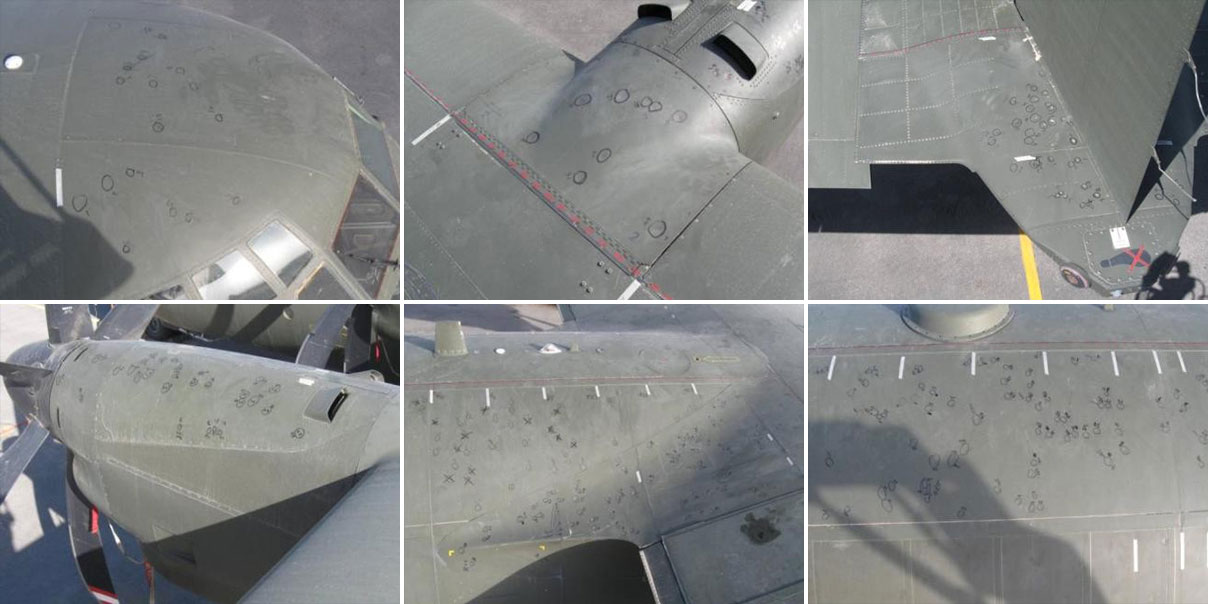
As the intense storm swept across Kandahar Airfield, all five UK C‑130Js deployed at the time were exposed to its full force. The damage was extraordinary: wings, fuselage skins and flight‑control surfaces were peppered with high‑velocity impacts, leaving 851 panels marked or compromised. All five aircraft were initially declared unserviceable.
“Hundreds of hailstones impacted the aircraft, damaging wings, flying controls and fuselages and rendering all five aircraft unserviceable.”
UK RAF Chief of the Air Staff
Commendation letter to Marshall Aerospace, 2013
As initial inspections took place, one critical challenge quickly emerged: every aircraft had suffered significant aileron damage, and the global supply system held nowhere near enough C‑130J spares to support timely recovery.
Drawing on decades of experience across legacy C‑130K and current C‑130J variants, Marshall Aerospace’s engineers proposed an unconventional but technically sound solution: temporarily replacing the damaged J‑model ailerons with available C‑130K components.
Developing and implementing this action plan at pace involved:
Fitting the K ailerons required re-routing of the trim-tab actuator loom, repositioning of support clips and re-orientation of the control rod attachment. In order to offer the best possible assistance to the RAF’s in-theatre engineers, Marshall conducted extensive installation trials in Cambridge and provided detailed routine technical instructions (RTI).
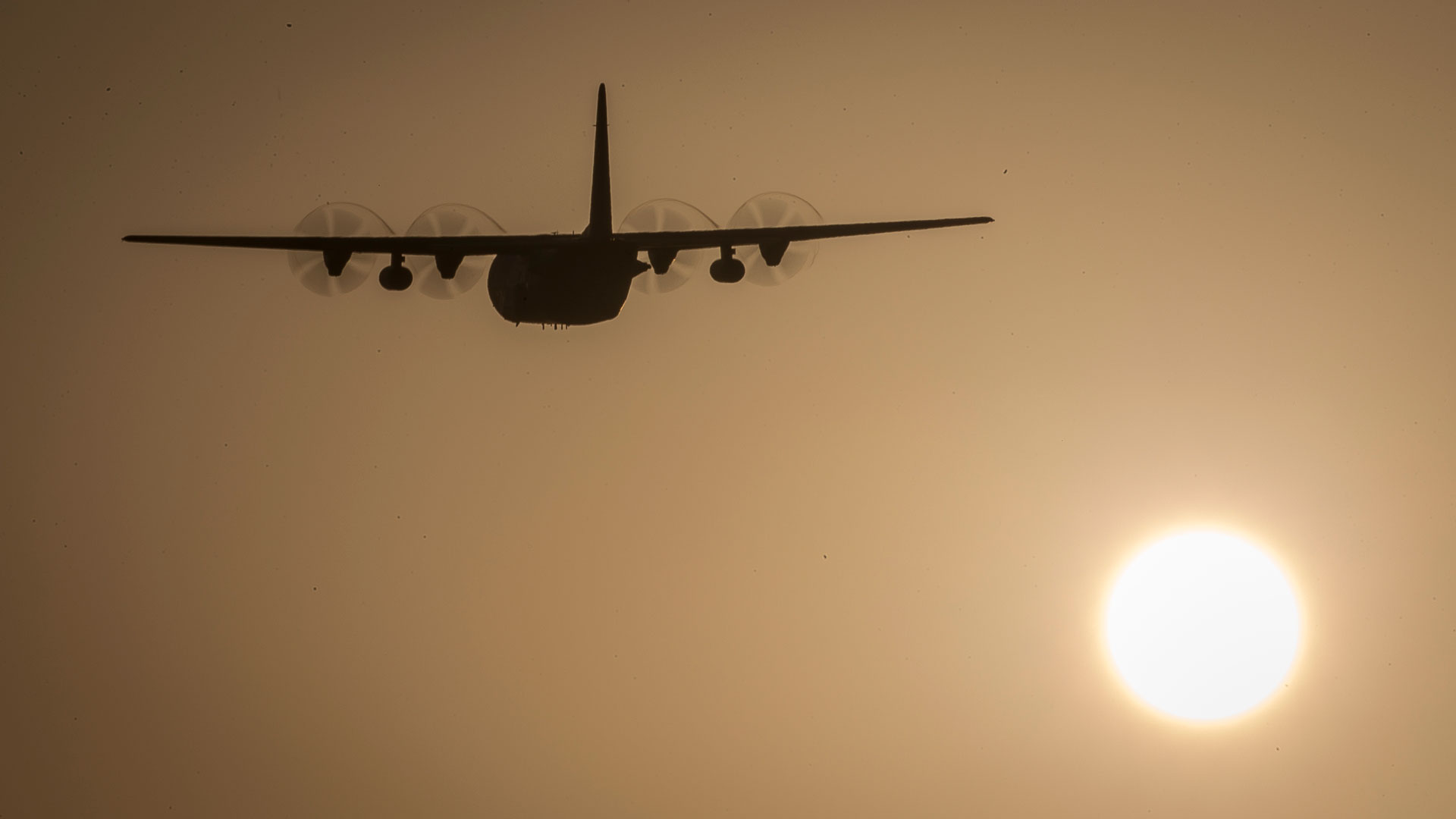
The intervention restored a safe path to airworthiness that enabled four aircraft to be ferried back to the UK within two months, while a fifth remained in theatre and returned to operational duties.
Subsequent inspections recorded an average of approximately 2,000 hail strikes per airframe, underscoring the sheer scale of the challenge Marshall’s engineers and technicians plan had to overcome.
Once the aircraft arrived in Cambridge, Marshall Aerospace again assumed overall responsibility for recovery on behalf of the MoD. It was an exceptionally demanding undertaking and required the full breadth of HIOS capability working in unison.
Marshall led and coordinated:
All of this was achieved while continuing to provide routine support and scheduled depth maintenance on the remainder of the RAF’s C-130J fleet, showcasing the scale and flexibility built into Marshall’s enterprise.
By mid‑September 2013, less than four months after the hailstorm, four of the five aircraft had returned to the Forward Fleet and resumed flying duties, with the fifth entering pre‑planned depth maintenance in Cambridge. This marked the successful conclusion of one of the most complex recovery actions undertaken on the UK Hercules fleet.
Beyond restoring aircraft to service, the project, which had been dubbed “Operation Weatherman,” was recognised by industry for its execution under intense time pressure and in austere conditions. Aviation Week & Space Technology honoured the effort with an MRO Award in 2014, noting how Marshall worked with Lockheed Martin and the MoD to stand up a dedicated team rapidly, replace damaged ailerons on site in Kandahar, and return one aircraft to operational duty within eight weeks. Later in 2014, Marshall received acclaim from the Institute of Mechanical Engineers in the form of a coveted Manufacturing Excellence Award.
“Marshall Aerospace’s swift and precise technical advice in support of this plan allowed the damaged ailerons to be replaced in Kandahar and was absolutely fundamental to the successful return of four of the five aircraft to the UK within two months of the hailstorm.
“It was Marshall's collaborative working with Lockheed Martin and the MoD in support of a common objective that stood out.”
UK RAF Chief of the Air Staff
Commendation letter to Marshall Aerospace, 2013
The fact that these aircraft were returned to operational service so quickly is testament to the Marshall’s ability to work collaboratively, with both customers and OEMs, to deliver a successful outcome.