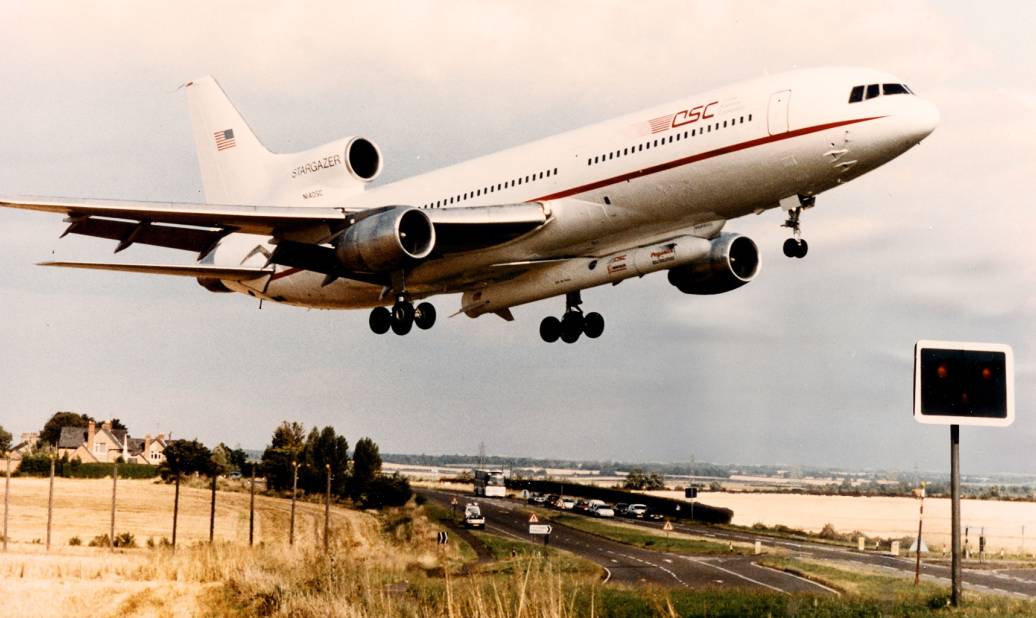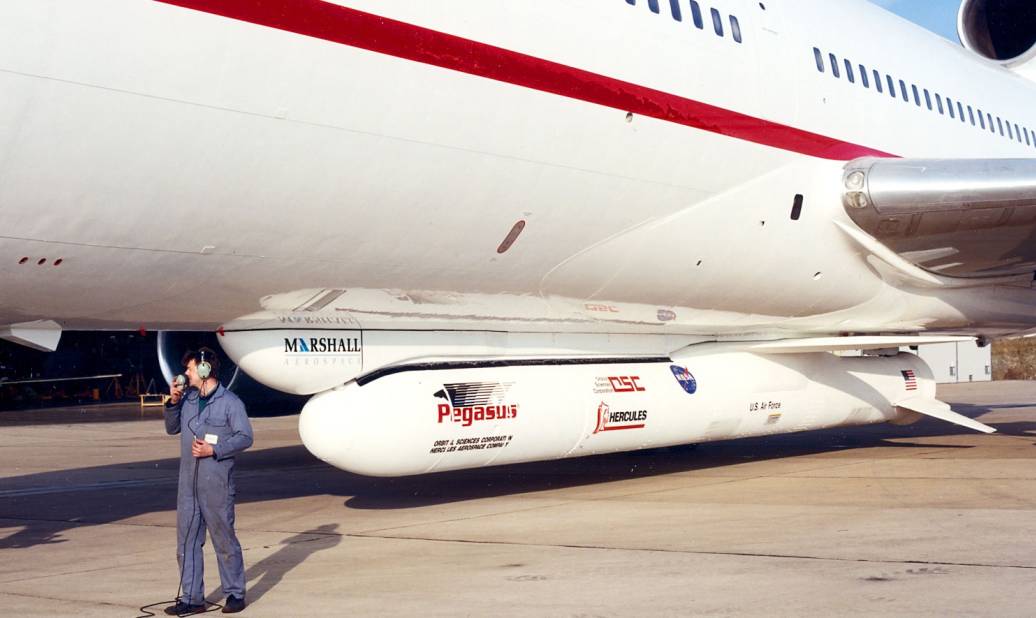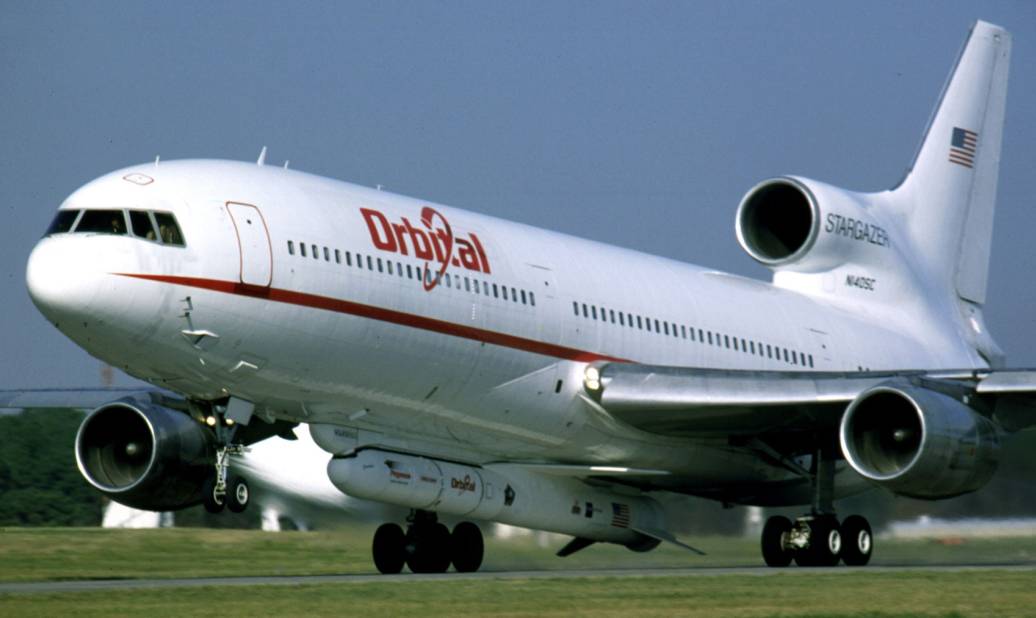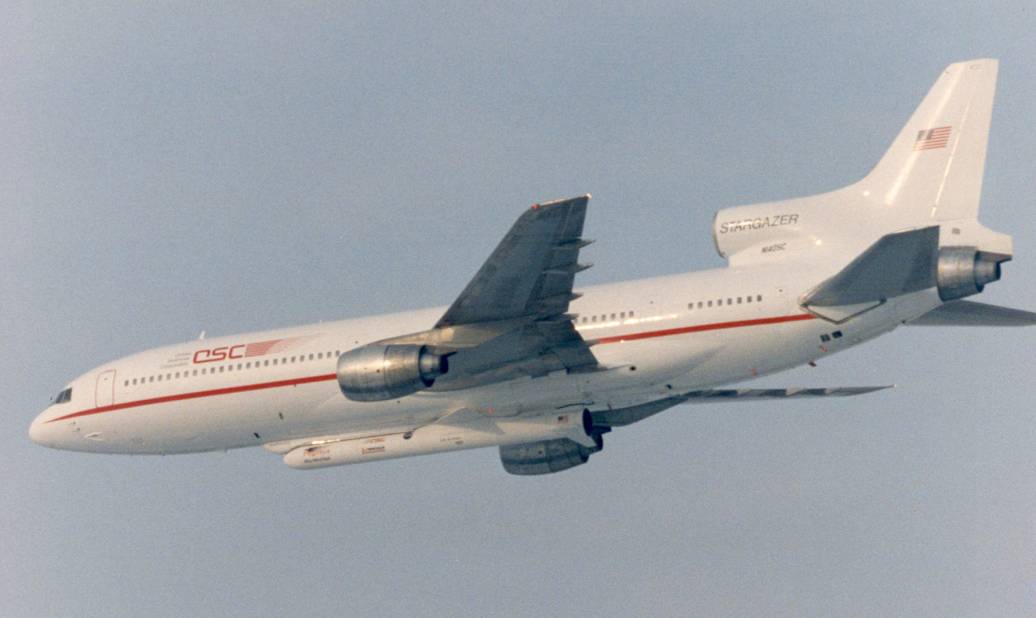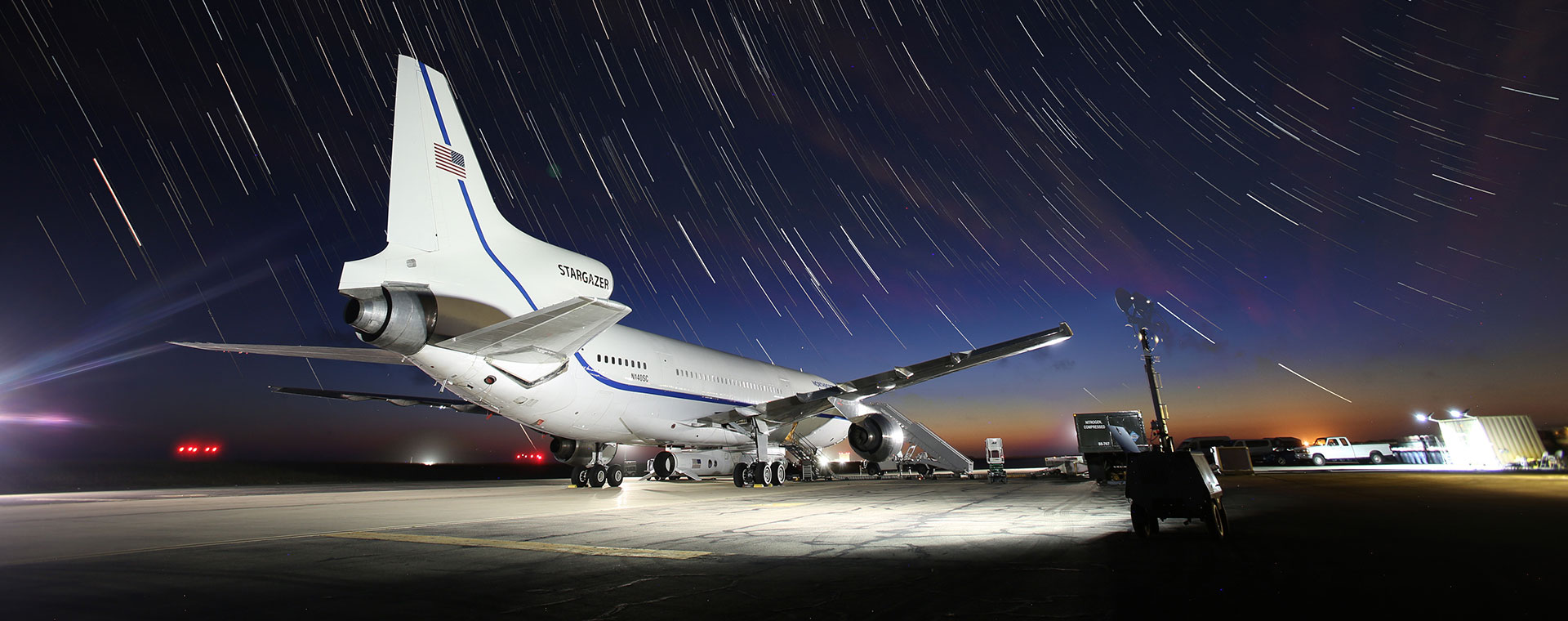
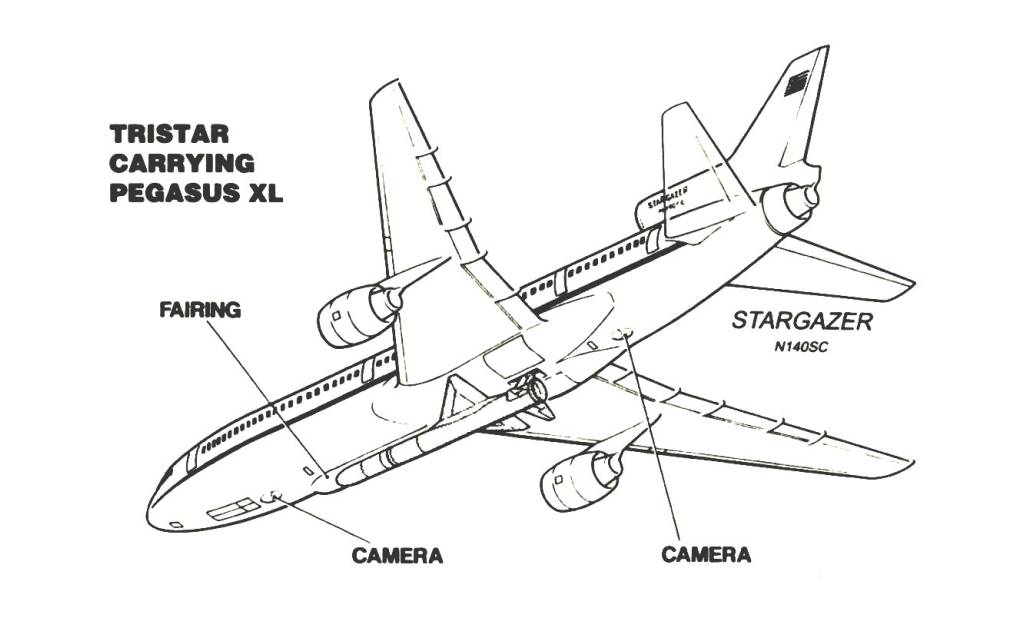
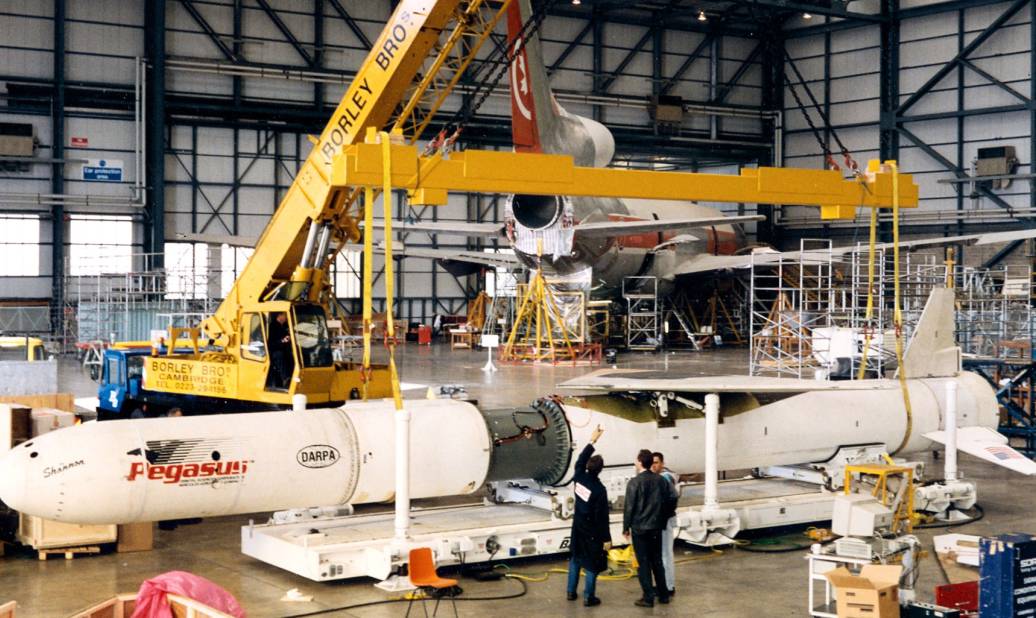
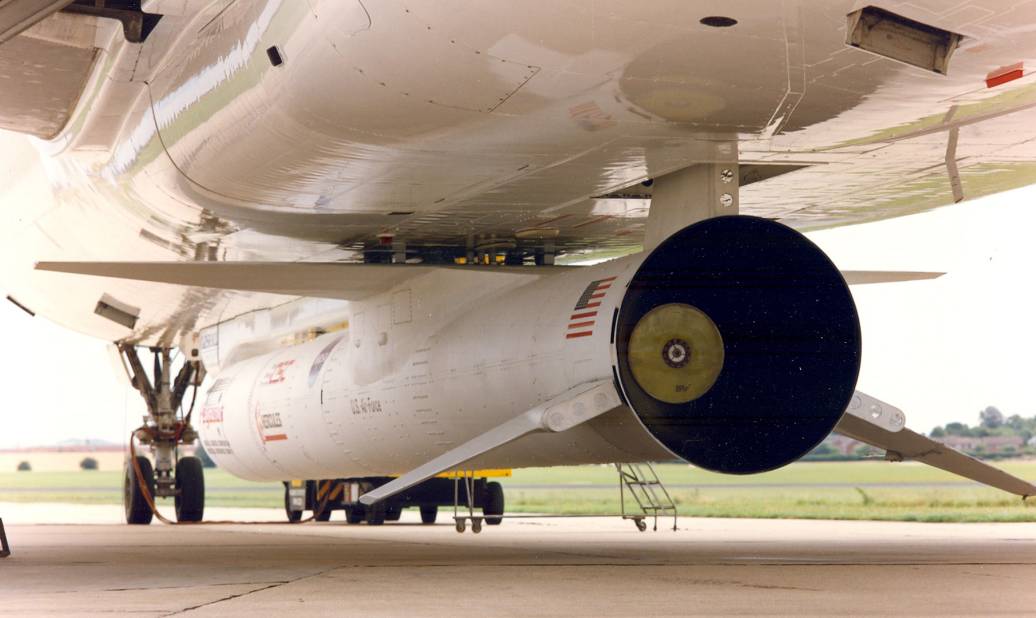
Marshall Aerospace converted a Lockheed L-1011 TriStar from a mature commercial airliner into a safe, airworthy and operationally viable release platform for the Pegasus orbital launch vehicle.
Spanning the full breadth of Marshall’s engineering capabilities, the programme combined analysis, structural redesign, mechanical integration, mission-systems installation, test activity, certification and follow-on engineering support.
The result was Stargazer, a specialist launch aircraft that delivered long-term operational value and demonstrated Marshall’s ability to adapt an established platform for an entirely new mission.
In 1992, Marshall Aerospace was selected by Orbital Sciences Corporation to convert a Lockheed L-1011 TriStar into a specialist air-launch platform for the Pegasus programme. The requirement was to create an aircraft capable of carrying, monitoring and releasing a Pegasus launch vehicle at altitude, allowing satellites to be deployed without relying on a conventional ground launch system.
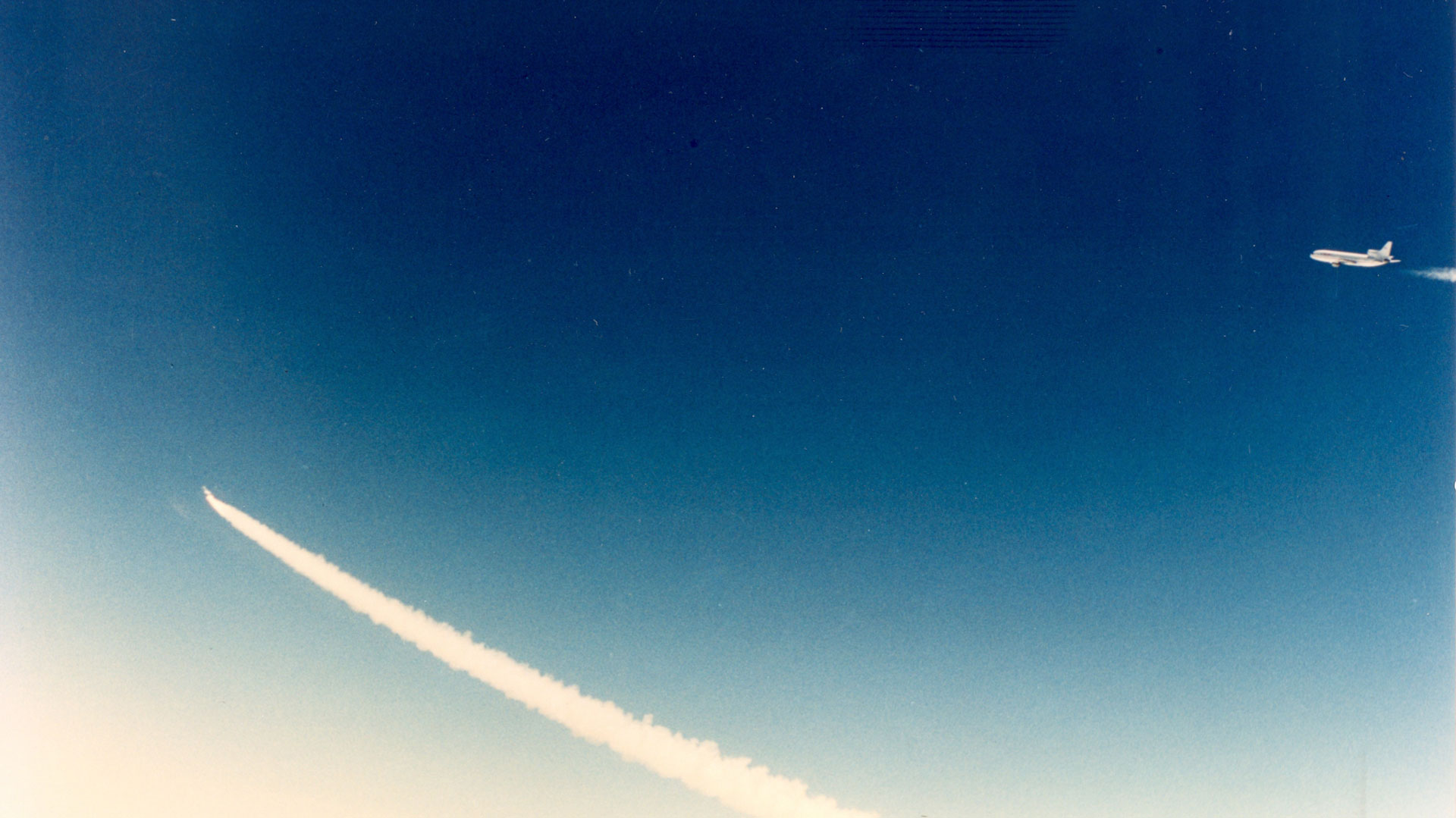
Pegasus is a three-stage solid-propellant launcher carried to around 40,000 feet over open ocean. Upon release, it free-falls for five seconds before igniting its first stage rocket motor. It is capable of deploying payloads into low-Earth orbit under its own power in a little over 10 minutes.
Weighing more than 23 tonnes, Pegasus was believed to be the heaviest gravity-dropped article ever released from an aircraft at the time this contract was awarded to Marshall.
A NASA-provided Boeing B-52 Stratofortress had previously been used for Pegasus launches, but commercial considerations for the programme required a more suitable aircraft, with the TriStar chosen as an alternative. The starting point was a mature commercial aircraft that had previously flown with Air Canada.
Marshall was selected on the strength of its established track record in major TriStar modifications and conversions, as well as its in-house design engineering capability, experienced hangar workforce, and metal process and treatment shops.
Carrying a large external launch vehicle safely, managing its behaviour in flight, and releasing it under tightly controlled conditions would require structural redesign, integration of a bespoke carriage and release mechanism, installation of mission-monitoring systems, and a robust certification pathway culminating in an FAA Supplemental Type Certificate.
Marshall Aerospace carried out the design, conversion and test programme at Cambridge, taking responsibility for the engineering analysis and structural design needed to adapt the TriStar to its new role. The modification package included removal of equipment and systems no longer required for the aircraft's commercial role, strengthening of the wing box area, manufacture and installation of the main carriage and release mechanism, and installation of a launch panel operator station together with the support systems needed to monitor Pegasus during captive flight and launch.
Each of those elements addressed a different part of the engineering problem. Strengthening the wing box area dealt with the structural challenge created by carrying a heavy external load. The bespoke carriage and release mechanism created a new mechanical interface between aircraft and launcher that had to perform reliably and predictably in flight. The operator station and associated support systems introduced a mission-management function into the aircraft, allowing the launch vehicle to be monitored during captive-carry operations and through release. Marshall's role therefore spanned structural engineering, mechanical design, systems integration, manufacture, installation, ground testing, flight testing and certification.
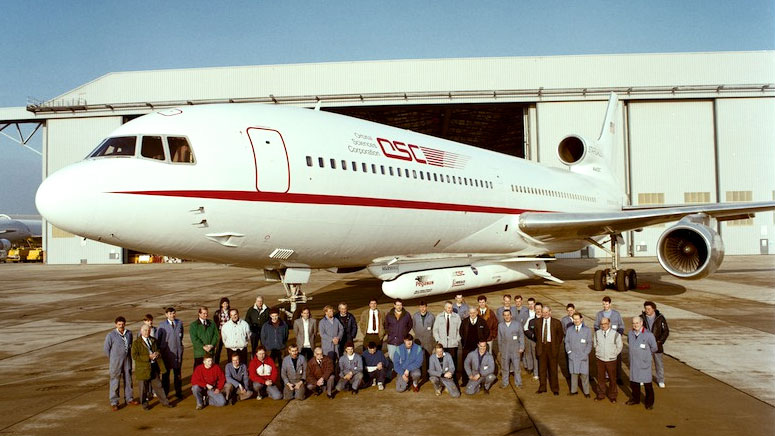
The converted aircraft then underwent an extensive test programme to prove both the platform and its new systems. The first successful post-conversion test flight took place from Cambridge on 10 August 1993, with the aircraft carrying a dummy payload. That flight was a critical demonstration that the modification, carriage arrangement and associated systems were functioning as intended in the air. Marshall subsequently prepared the aircraft for final presentation to Orbital Sciences in Washington on 30 November 1993.
1992 – Orbital Sciences selects Marshall Aerospace to design and convert the L-1011 TriStar for Pegasus operations; the aircraft arrives in Cambridge.
August 1993 – First successful post-conversion test flight from Cambridge with a dummy Pegasus payload.
November 1993 – Aircraft prepared for final presentation to Orbital Sciences in Washington.
April 1995 – Successful Pegasus launch from the Marshall-converted TriStar, validating the aircraft in operational service.
1995 – Marshall engineers receive NASA's Orbital Launch Services Peer Award for their contribution to the programme.
1999 – Marshall provides rapid follow-on design and embodiment support on the L-1011 during later Orbital work, again demonstrating responsiveness on this highly specialised platform.
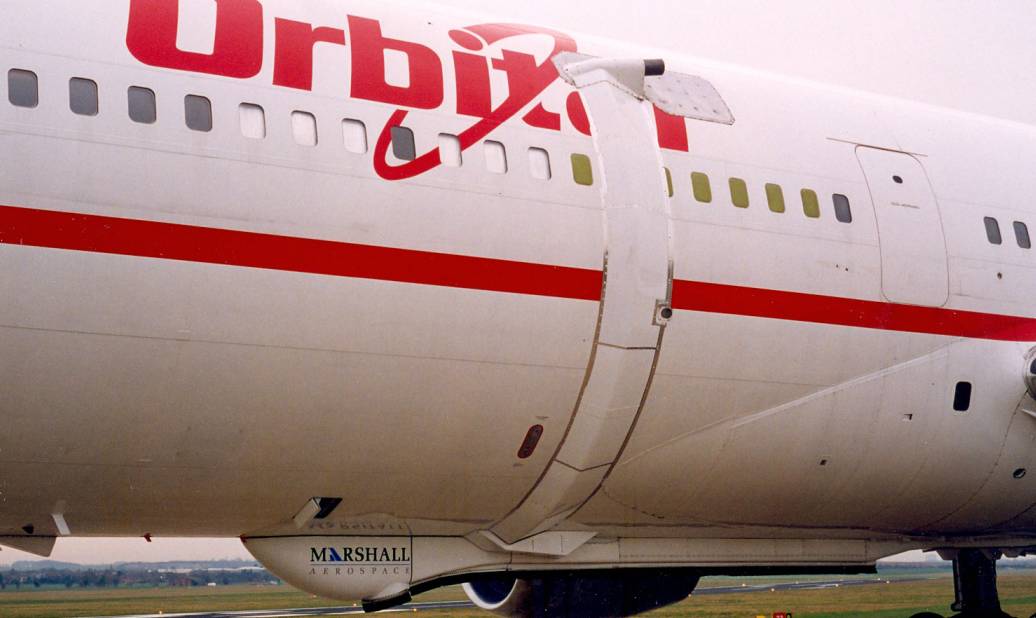
The programme also illustrated Marshall's ability to respond rapidly once the aircraft was in service. During later Orbital work connected with the L-1011, Marshall's Design Office developed a repair scheme and a system of strakes to control downstream airflow after vortices from the carried vehicle caused buffeting and damaged downstream fairings. This was followed by an accelerated manufacturing and installation effort by a small Marshall team, completed in time to avoid disruption to the customer's planned activity.
Marshall's conversion created a working airborne launch platform. Following the 1993 test programme and handover activity, Stargazer delivered its first successful Pegasus launch in April 1995. The programme demonstrated Marshall's ability to deliver an unusual and technically demanding aircraft modification that combined structural work, systems integration, testing and certification discipline in one coherent solution.
The work also received external recognition. Four Marshall Aerospace engineers - Bob Ward, Jim Webb, Graham Redgrave and Kieran Gracie - received NASA's Orbital Launch Services Peer Award for their contribution to the Pegasus conversion programme.
"Skill, thoroughness and competence without compromise were pronounced from the Marshall people at each step of the conversion."
Donald Miller
Project Manager, NASA
Orbital later commended Marshall's onsite team for its speed, ingenuity and adaptability during follow-on work on the same aircraft.
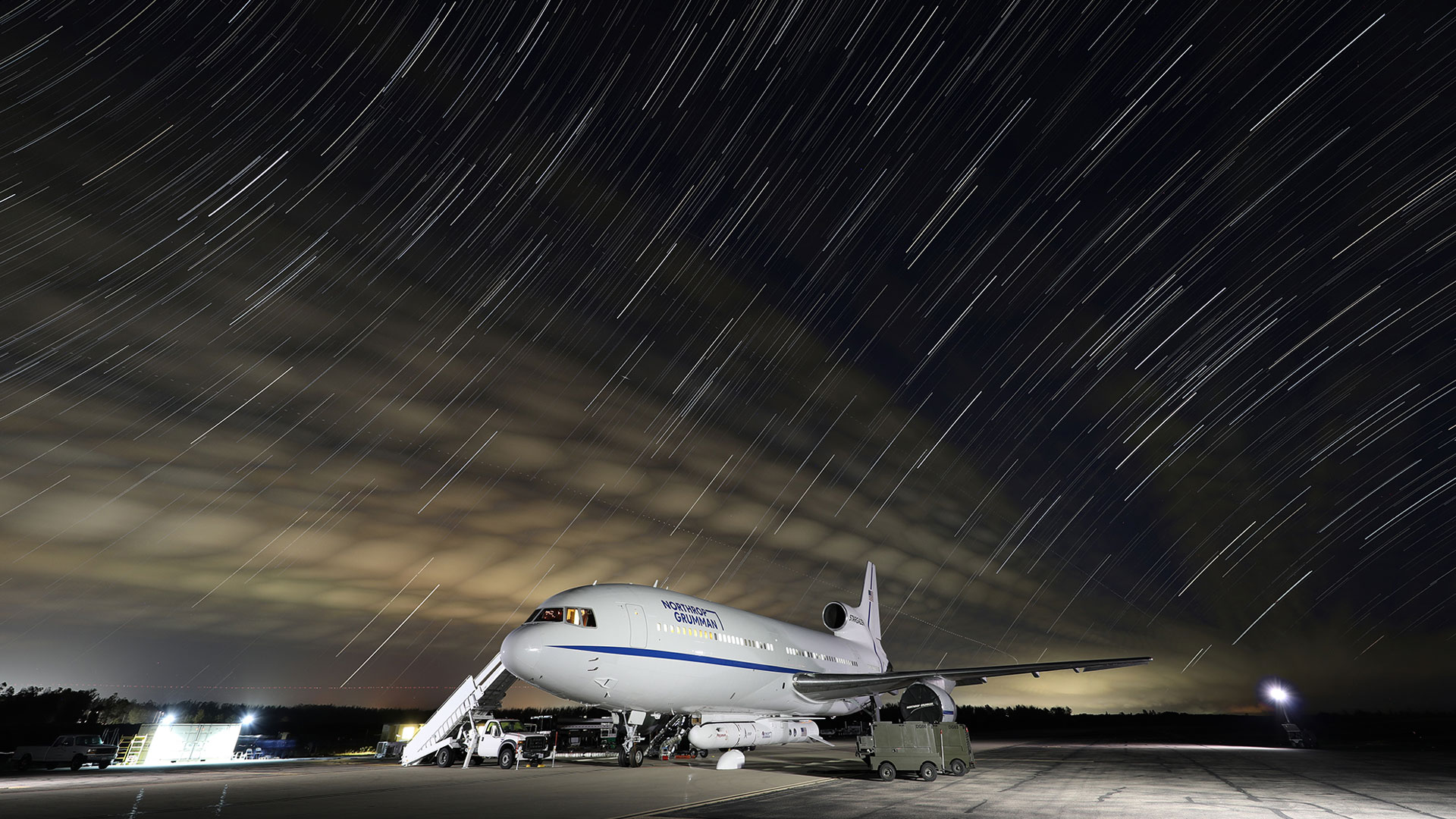
The longer-term outcome was equally significant: Stargazer has remained operational long after the retirement of other TriStar aircraft, launching nearly 100 satellites over 45 missions. The aircraft and its Pegasus XL payload are currently listed by NASA under its Launch Services Program.
In Stargazer, Marshall delivered more than a successful one-off modification; it combined its full array of engineering strengths to create a certifiable, supportable and operationally useful capability with lasting value.