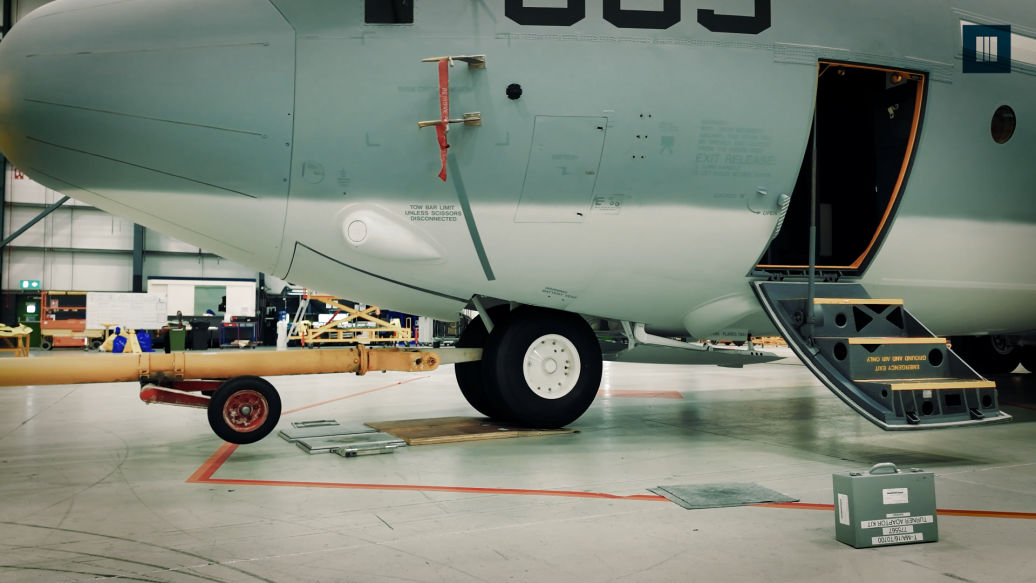
Before a C‑130 leaves our hangars and returns to service, it must go through one final check: a full aircraft weigh. Our latest deep‑dive video takes viewers onto the hangar floor to see exactly how this process works - and why it’s essential for flight safety.
As this particular C‑130 nears customer delivery, weighing the aircraft is a critical step in verifying its performance and ensuring it meets all operational requirements. An aircraft’s weight directly affects stability, structural integrity, fuel efficiency and overall performance.
Why a C‑130 needs to be weighed
The requirement to weigh an aircraft can be triggered by several factors, including the length of time it has been in maintenance, completion of a repaint, or the installation of major modifications. In fact, the repaint on a C-130 Hercules alone can weigh up to one‑third of a tonne.
Before the process begins, the aircraft is fully inventoried and configured to a known, controlled fuel state.
Precision equipment, strict tolerances and repeated checks
To capture an accurate measurement, the C‑130 is positioned on six individual scale pads - one for each wheel. The aircraft is weighed a minimum of two times, confirming that the system is calibrated correctly and that both readings fall within the required tolerances.
The total aircraft weight must sit within 0.5% accuracy, a narrow margin designed to guarantee the data is reliable for load planning, performance calculations and flight certification.
Determining the centre of gravity
A plumb bob is installed inside the fuselage and used to level the aircraft precisely, enabling technicians to calculate the centre of gravity point accurately. This is checked throughout the process to ensure the weight is correctly distributed. The centre of gravity tolerance is within 0.5 inches.
A critical step before return to service
The video offers a rare look at the behind‑the‑scenes of a C-130 Hercules weighing — a blend of engineering discipline, specialist tooling and meticulous verification. It’s a reminder that unseen work like this underpins the precision and safety standards we uphold for every C‑130 we support.