
Bob Baxter is CEO of Marshall Aerospace.
Over the past 40 years, he has led business growth initiatives for several multinational aerospace and defence industry leaders including GEC Marconi, Raytheon, BAE SYSTEMS, Leonardo and Thales.
Baxter is also a Senior Research Fellow in Defence at Exeter University.
The UK is rightly spending more time thinking about resilience, readiness and the strength of its defence industrial base. These themes are written deeply into the 2025 Strategic Defence Review and Defence Industrial Strategy, and dominate the wider discourse around future defence investment.
But one question still deserves more attention than it receives: how “sovereign” and “resilient” is our framework for sustaining, adapting and technically assuring the aircraft UK defence depends on?
It’s tempting to brush aside a question about “sustaining sustainment” in an environment dominated by billion-pound acquisition decisions, but when 70 percent of an asset’s cost occurs in the operational support phase, it’s a question that matters precisely because enduring defence capability is not defined only by acquisition.
It is also defined by whether a nation retains the engineering capacity, approvals, experience and industrial depth needed to keep aircraft available, modify them safely and evolve them in line with changing operational demands.
In this article, I have tried to offer a personal perspective on this issue through three linked points.
First, air capability only retains its value if it can be sustained and adapted in step with operational need, at the pace of relevance.
Second, sovereign MRO and modification capabilities give the UK greater practical control over that process.
Third, the measure of success will be whether current policy priorities are visible in decisions about support contracts, upgrade pathways and the ownership of through-life engineering work.
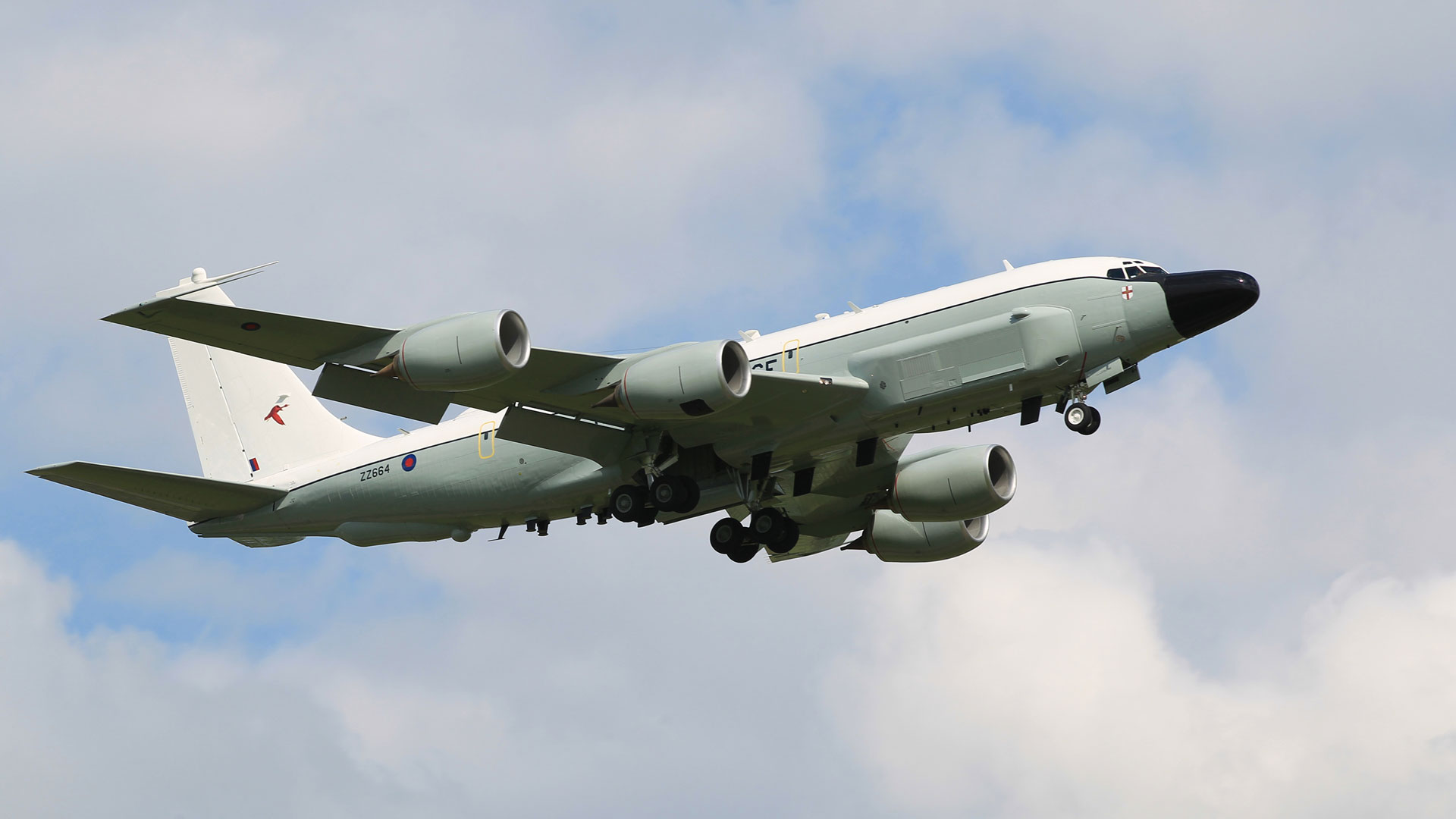
UK Rivet Joint RC-135W signals intelligence aircraft
Capability is not defined by the amount of inventory on the flightline
Defence debates often gravitate towards platforms, fleet sizes and procurement decisions.
Those issues are important, but the real challenge takes the form of a decades-long slow burn after acquisition: where does the engineering competence sit when aircraft need modification, certification, urgent repair or capability insertion at pace?
That question is especially important in military aviation, where platforms are expected to remain in service for decades and where operating requirements rarely stand still for long. Air mobility, ISR and specialist mission fleets derive their value over time. Their usefulness depends not simply on their baseline specification, but on whether they can be maintained properly, upgraded intelligently and kept aligned with real-world demands.
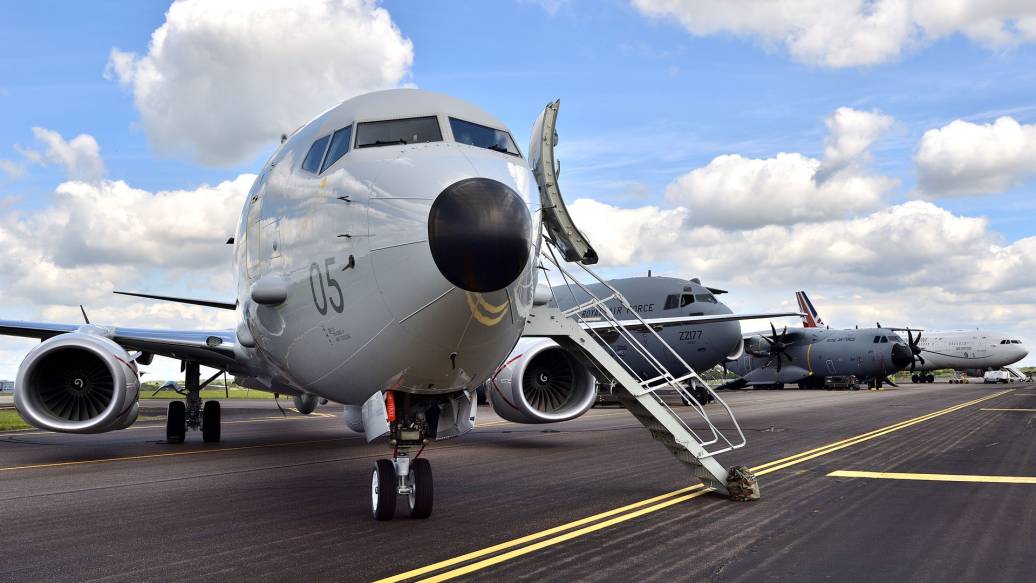
That applies just as much to the UK’s current fleets—including Atlas, Poseidon and the incoming Wedgetail—as it does to any future programme. The aircraft itself is only part of the capability equation; the support model behind it matters just as much over time.
Air fleets must evolve throughout service life
Aircraft in military service do not remain in their original form. They take on new communications requirements, mission-system changes, survivability improvements and role-specific adaptations – all of which must be delivered in line with evolving regulations. Some of those changes must be planned long in advance. Others emerge from operational experience, shifting threats or new requirements.
That is why MRO and modification capability matters so much. A fleet’s long-term utility depends on the ability to make changes safely, efficiently and with a clear understanding of the platform’s behaviour in service.
When that capability leaves the country, the UK has less direct control over how quickly and effectively change can be delivered. When it exists in-country, operators and engineers are closer, knowledge is easier to retain and technical problems are easier to resolve in context.
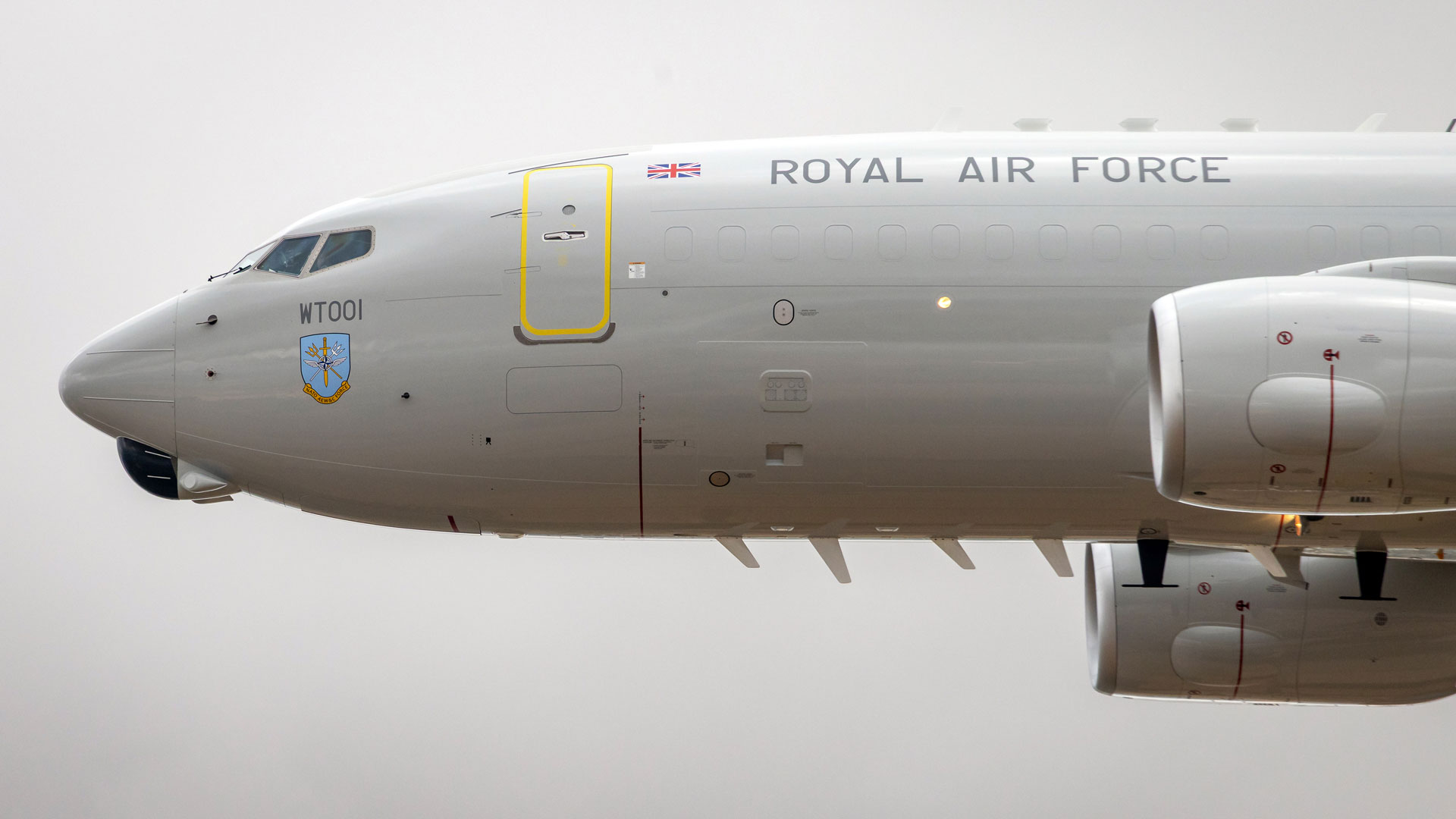
Royal Air Force’s E-7 Wedgetail AEW Mk1
Sovereignty is about building the right partnerships, not making binary choices
I am not building a case for isolation, for challenging the central role of the OEM, or for attempting to reproduce every OEM function onshore. Sovereignty does not need to mean autarky.
In complex fleets, the OEM plays a trusted and critical role as design authority, technology owner and long-term partner. In fact, the strongest support models are those that combine OEM authority and global fleet knowledge with deep in-country engineering, maintenance and certification capability.
The real policy question for the UK is which of these capabilities are strategically important enough that we should make special efforts to retain them in our own industrial base.
Expertise requires investment, but pays dividends
High-value aerospace engineering capability is cumulative. It is built over years through design activity, approvals, certification work, maintenance practice and repeated exposure to the realities of operating aircraft in service. These activities develop institutional memory, technical judgement and a deep reservoir of practical competence—all things that cannot materialise quickly if demand suddenly increases.
This matters because support models shape whether capability is preserved or diluted. If a genuine, sustained effort is made to cultivate UK-based engineering organisations through involvement in domestic programmes, their expertise will prove easier to maintain and call upon reliably when demands intensify. That is especially relevant in an environment where the UK is explicitly talking about preparedness, resilience and the ability to generate usable force at greater pace.