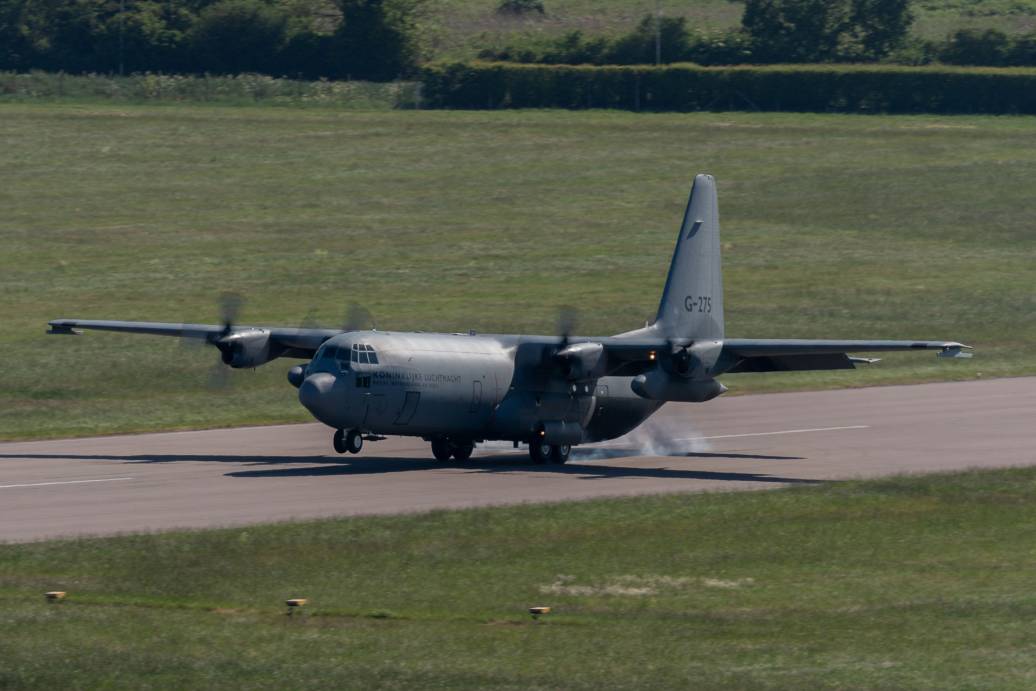
Marshall Aerospace has received a multi-year extension to its Engineering Support (ESP) contract for legacy C-130 aircraft operated by the Royal Netherlands Air and Space Force (RNLASF).
The extension, concluded between Commando Materieel en IT (COMMIT) and Marshall, paves the way for Marshall’s Aero Engineering Services team to continue providing expert guidance to maximise the availability and capability of RNLASF’s fleet of four C-130H aircraft until their out-of-service date.
Under its support-to-operations service model, Marshall provides direct dial-in access to its engineers based in Cambridge, who routinely advise front-line operators and RNLASF airworthiness staff on wide-ranging technical matters including repairs, parts, modifications, service bulletins and documentation.
“We are delighted to continue this very successful technical support arrangement with RNLASF, which has seen our two teams working incredibly closely in support of 336 Squadron’s C-130H fleet.
“As the aircraft enter a new phase of their operational lifecycles, our expertise on legacy C-130 aircraft will translate directly to availability as we respond to unique challenges related to retirement from service.”
Mark Hewer
Director of Aero Engineering Services, Marshall Aerospace
The technical support service forms part of a broader working relationship between Marshall and RNLASF that is now in its 30th year. Over the decades, Marshall has supported the air force’s C-130H fleet with modifications and a range of maintenance, supply chain and engineering services.
In 2012, Marshall completed a series of major modifications and upgrades on all four aircraft, known as the Cockpit Upgrade Programme (CUP) and the Cabin Safety Improvement Programme (CSIMP). The programmes included the removal of legacy or redundant systems and the integration of commercial off-the-shelf equipment, in addition to solutions developed specifically to meet RNLASF’s requirements.
At the time of acquisition, two of the Dutch aircraft had been configured and operated as EC-130Qs (a maritime electronic warfare variant of the C-130H) by the U.S. Navy before being put into long-term storage in Tucson, Arizona. The aircraft were dismantled and transported to Cambridge where Marshall Aerospace led the recovery and upgrade to C-130H build standard—one of the most extensive and complex engineering projects the company has undertaken to date.
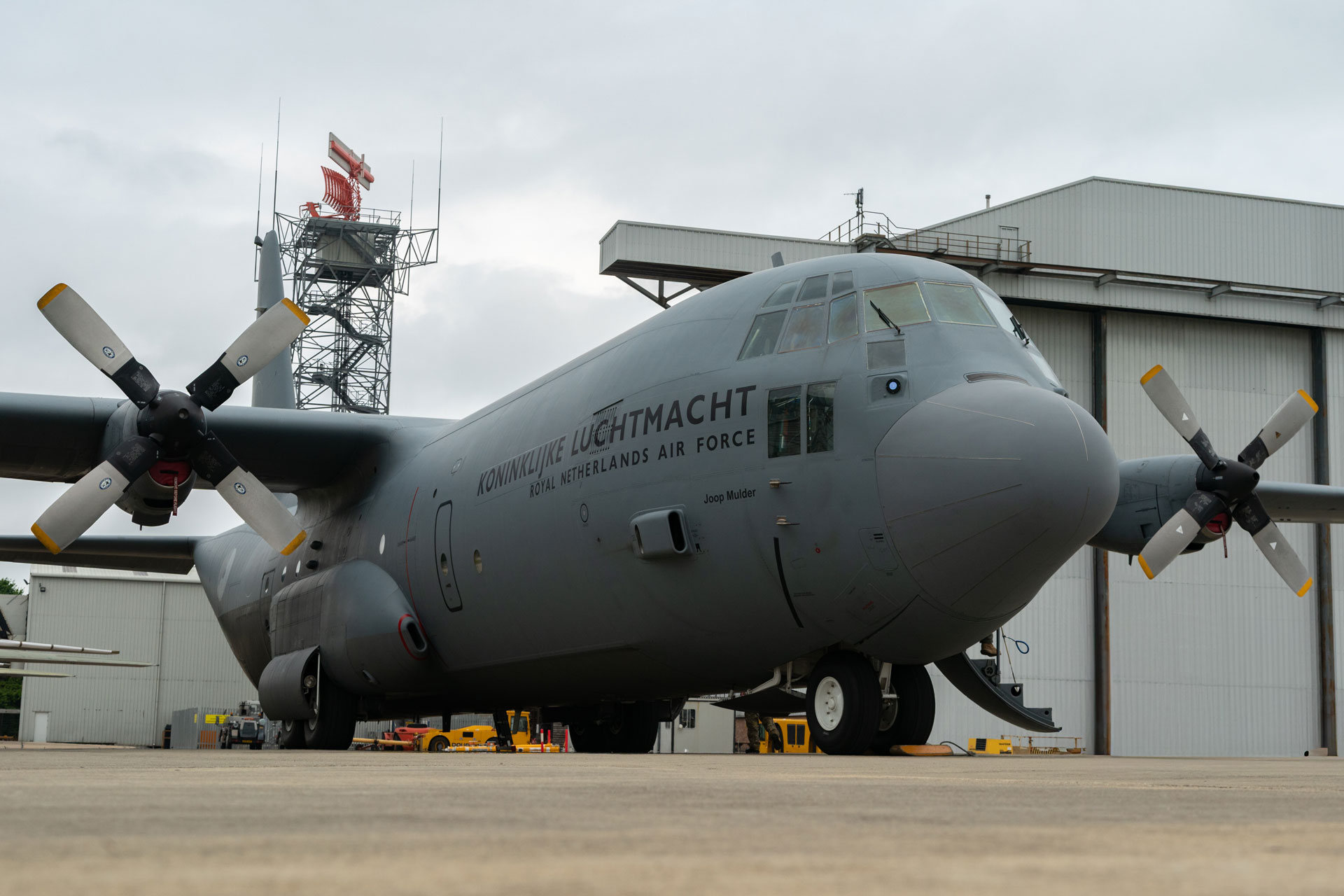
Photo credit: Thomas Saunders