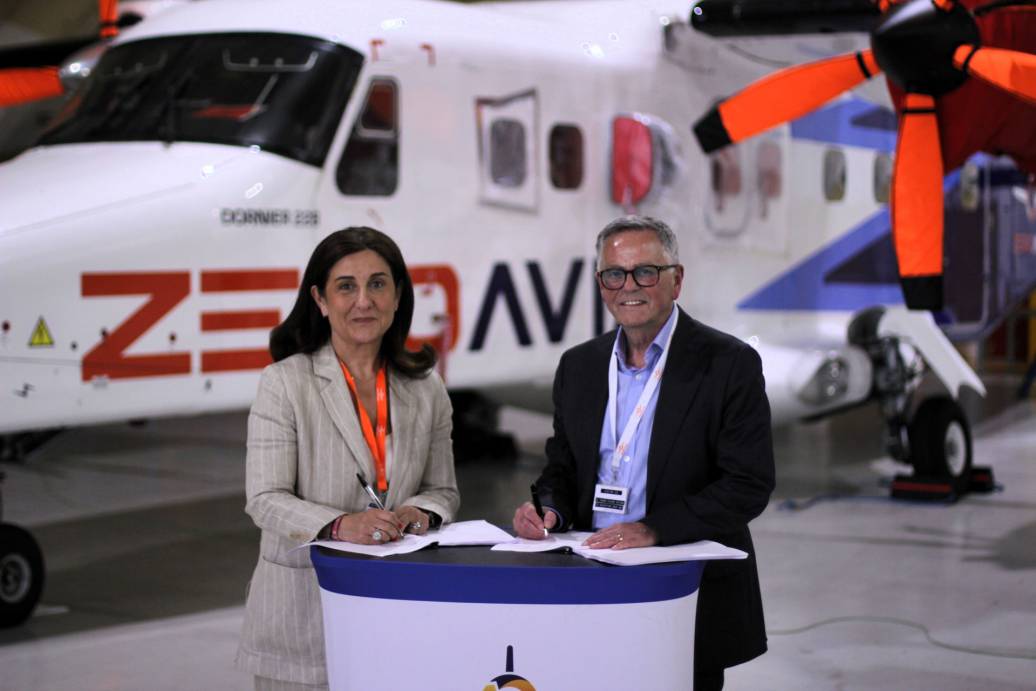
ZeroAvia, a leader in hydrogen-electric aviation, and engineering and manufacturing specialist Marshall Aerospace have entered into a collaboration to develop hydrogen-electric capability for defence platforms.
Announced today, the agreement combines ZeroAvia's flight-tested hydrogen-electric power and propulsion system technologies with Marshall's expertise in military aircraft modification, integration, certification, and complex fuel systems. Together, the companies will seek to integrate scalable, mission-ready hydrogen-electric power and propulsion solutions for defence customers across both new and existing aircraft platforms.
The initiative will accelerate the deployment of next-generation propulsion and power systems in defence aviation, including hydrogen storage and distribution, aircraft systems integration, thermal management, weight and balance, safety, certification and through-life support. The objective is to establish a clear pathway from technology maturity to operational capability.
Modern military operations are placing increasing demands on aircraft endurance, onboard power, survivability and operational flexibility across a growing range of mission types. From uncrewed aerial systems (UAS) and intelligence, surveillance and reconnaissance (ISR) platforms to logistics, training and specialist mission aircraft, operators are evaluating new propulsion and power architectures capable of delivering enhanced performance in applications where battery-only systems face range, payload and endurance limitations.
Initial efforts are focused on identifying highest-impact applications. Priority areas include UAS, ISR, logistics, training and special mission aircraft, where the technology can deliver a step-change in endurance, acoustic and thermal signatures, operating costs and deployability.
Marshall will draw on its extensive experience supporting and modifying military aircraft for demanding operational environments, helping ensure hydrogen-electric systems can be integrated in a way that meets the performance, safety and certification requirements of defence customers.
"This collaboration is about translating the promise of hydrogen-electric propulsion and power into real operational capability for military users.
"Many military applications require greater endurance, lower thermal signatures and improved operational flexibility than existing electric propulsion technologies can provide today. By combining our validated propulsion technology with Marshall's deep integration and certification expertise, we can accelerate the pathway to deployment."
Christine Ourmieres-Widener
Executive Chair, ZeroAvia
Hydrogen-electric propulsion is increasingly recognised as a key pathway to delivering electric flight at scale, particularly in applications where battery-only systems face limitations in range, payload and endurance. For defence operators, the technology also offers the potential for quieter operations, lower thermal signatures and reduced lifecycle costs across a range of mission sets.
ZeroAvia has already achieved significant flight-test and regulatory milestones with both the UK Civil Aviation Authority and the U.S. Federal Aviation Administration and remains the world's only Design Organisation Approval (DOA) holder focused exclusively on hydrogen-electric aviation. The company has secured more than 3,000 pre-orders for its ZA600 and ZA2000 propulsion systems from airlines, OEMs and defence customers worldwide.
“We are excited to work with ZeroAvia to provide a clear and credible pathway for military operators to exploit the benefits of hydrogen-electric flight.
“With our deep experience in complex aircraft modification and certification, we are well positioned to help translate this transformative technology into operational capability for defence customers.”
Bob Baxter
CEO, Marshall Aerospace
The companies expect to expand their joint work towards specific platform programmes and deployment initiatives, supporting the development of more capable, resilient and adaptable military aviation systems.